Course timing and readings
For Tuesday’s Class We are going to settle up from our classroom experiment during the start of class on Tuesday. If you owe us $5, please bring cash or prepare to Venmo me. My Venmo is @wintercow20. If you accepted the deal and we owe you money, we will pay you in class as well.
NOTE: the total funds that we generate from the experiment after payout to the WTA group will be used to donate to support local birding education and conservation at Braddock Bay Raptor Research. We still have a handful of students to settle up with.
For the class material, we plan to spend a total of four lectures on our first section of the course before moving onto a short section on energy, so both lectures this week will be on environmental risks and our reaction(s) to them.
Assignments and due dates
Your second weekly assignment will be posted by tomorrow night (possibly this afternoon). The assignment again includes two small research pieces, asks you to read and react to an article, and includes a small number of review questions from the class material. The second assignment is due on Sunday, September 7th. Once the semester gets under way, I aim to have the assignments put out on the Friday nine days before they are due.
Please do your best to get started on each assignment early. In particular, we are asking you in a few questions to engage in conversations with your peers – and it is highly unlikely that you will be able to do this effectively and organically by waiting until Sunday afternoons.
We are targeting a ONE WEEK turnaround for each weekly assignment. So, you should expect to see your grade by Monday mornings a week after the submission. Your TA will leave their initials along with comments on some of your work so you can keep track of who graded it. You will have a randomly assigned different TA grading your work each week.
Course projects
Group Project Cheat Sheet
We have THREE group experiences in lieu of quizzes and exams.
- 1. Get Outside Project:
- a. Due November 4th.
- b. Group size between 4 and 8.
- 2. EETT (this is part one of a two-part engagement experience)
- a. Reflection 1: due as part of Week 3 RRR (Sept 14th)
- b. Reflection 2: due as part of Week 4 RRR (Sept 21st)
- c. Individual EETT Submission: due Sept 25th
- d. Group Precis: due Oct 5th
- e. Final Project: due Oct 17th
- f. Group size between 4 and 8
- 3. Interview Project (this is part two of a two-part engagement experience)
- a. Project due December 11th
- b. Group size between 4 and 8
Form Your Groups, Start Your Projects All of the details on the what/how/who of the group projects can be found under, “Projects” on Blackboard.
In addition, to aid you in finding group members (I encourage you to mill around before or after lecture, but I know some of you don’t love that idea) there is a tentative class list posted in the “Syllabus ...” folder on Blackboard. Excellent projects are those that are pondered and discussed and debated all semester long. It will be evident if you do or do not do this. Note that Professor Rizzo grades all non-weekly work for the course.
Our TAs will assist you in finding a group if and only if you have tried unsuccessfully for the first two weeks of class.
Other class administration and availability
Discussion Portions of Your Weekly Assignments: Please look each week for a reminder from Caitlin about our TA led discussion sessions. We are continuing to work on these and want to provide a space for real engaging conversations, the TAs are prepared to engage you with whatever discussion items we included in that week’s assignments, and we are also able to look back to previous week’s assignment to discuss the questions that are in the process of being graded.
TA Office Hours and Info Look for an announcement from our Head TA Cailtin Lipton for an update.
- The TAs are going to offer office hours and weekly discussion sessions which will enable you to explore class topics more deeply, and to dive into portions of the weekly class work (and possibly receive credit for doing so).
My Availability Call or text me if you would like to chat over the weekend, I will not be on my computer. I can be reached at 585-478-2677.
For the most up to date info on my office hours availability, and campus whereabouts and other ways (possibly) to meet and get in touch with me, check this announcements page each week.
To access our updated office hours schedule (and for additional econ information including internships, grad school, special events, etc.) please subscribe to our Office Hours Blackboard page at tiny.cc/RizzoHours. I update my calendar weekly on that page, and include other sometimes useful information on it for you.
- Will be having outdoor Lunch Bunch hangouts on Mon and Weds 1130am to 1245pm. Come on by.
GET STARTED ON A CLASS “GET OUTSIDE” PROJECT
Sunday, September 7th: Beginner Birder Trip – Charlotte and Turning Point Park 8am-noon

We’ll be looking for shorebirds, warblers, and other fall migrants along the river and lakeshore. At Charlotte Beach, we’ll look for gulls in many plumages and some shorebirds, too. At Turning Point Park, we will look for local resident birds and fall migrants.
The Charlotte Beach area is mostly flat and paved; one long, steep grade at Turning Point Park. Length about 2 miles total. Restrooms are available at Charlotte only. Meet at 8:00 a.m. at Ontario Beach Park in Charlotte in the northeast corner of the parking lot, beside the Genesee River outlet. Binoculars and spotting scopes are good to have.
Leaders: John Boettcher 585-671-9639 and co-leader TBA
Restrooms are available at Charlotte only.
Meet at 8:00 a.m. at Ontario Beach Park in Charlotte in the northeast corner of the parking lot, beside the Genesee River outlet. Bring binoculars and, if you have them, spotting scopes.
Note: This is a field trip for beginners. New birders should feel free to join these trips regardless of experience level: bring binoculars if you have them. The pace & focus of Beginner Trips may not be satisfying for experienced birders. Our Beginner Trips focus on teaching identification skills, learning new habitats, and answering questions. Experienced birders are welcome but may be pressed into service as educators
Upcoming Special Events
Department of Economics Engerman Lecture
Who: Robert Margo of Boston University
A specialist in the history of the American economy with particular emphasis on the economic history of African-Americans, Margo is the author or co-author of 5 books and over 150 articles, book chapters and book reviews. He has served on the editorial boards of many journals, including the Journal of Economic History, the American Economic Review, and the Quarterly Journal of Economics; and he has served as editor or co-editor of the Southern Economic Journal and of Explorations in Economic History. He was elected a Fellow of the Cliometric Society in 2012.
Additionally, Margo is an accomplished performer on classical guitar, mandolin, renaissance and baroque lutes. In the Boston area, he performs regularly with the Providence (Rhode Island) Mandolin Orchestra and the New American Mandolin Ensemble.
When: Wednesday, October 15th
Where: TBD
What: TBD
The Politics and Markets Project, Hosted by Professor David Primo
Title: Topic TBD (this will be a moderated panel discussion, likely on immigration)
Date: Wednesday, November 5th
Time: 7:30pm to 8:30pm
Location: Wegmans Hall, 1400.
The Department of Economics will be hosting several additional events this fall, TBA, coming soon!
Expected Guests/Topics: Lorenzo Caliendo (late September); Paul Bloom on Empathy/Compassion; David Livingstone-Smith (philosopher); Victor Haghani (money manager)
Some Things That Captured Our Attention
Don’t Worry, We’ll Get it Right for the Green Revolution: “We Spent $140 Billion on Reconstruction” … and we didn’t even get this lousy t-shirt: “…the federal government did something extraordinary: It committed more than $140 billion toward the region’s recovery. Adjusted for inflation, that’s more than was spent on the post-World War II Marshall Plan to rebuild Europe or for the rebuilding of Lower Manhattan after the Sept. 11 attacks. It remains the largest post-disaster domestic recovery effort in U.S. history… Today, New Orleans is smaller, poorer and more unequal than before the storm. It hasn’t rebuilt a durable middle class, and lacks basic services and a major economic engine outside of its storied tourism industry.
The core problem was the inability to turn abundant resources into a clear vision backed by political will. Federal dollars were funneled into a maze of state agencies and local governments with clashing priorities, vague metrics and near-zero accountability. Billions went to contractors and government consultants services such as schools, transit, health care and housing were neglected. For example, one firm, ICF International, received nearly $1 billion to administer Road Home, the oft-criticized state program to rebuild houses.”
GPTZero … designed by an undergrad. Model where this entire game ends
“Despite these clear advantages, prescribed burning remains dramatically underutilized. A 2011 study found that Oklahoma alone had 9.1 million hectares (22.5 million acres) requiring periodic burning, yet only 18 percent of the necessary annual burns were being conducted. In California, land managers have set a goal of using prescribed fire on 400,000 acres annually to reduce dangerous fuel loads. Yet in 2022—the most recent year for which data is available—only about 96,000 acres were burned, falling far short of that target. Similar gaps exist nationwide, particularly as wildfire risks intensify due to climate change and past fire suppression policies.”
Why Can’t We Have the Best Batteries Ever? “The new groups are employing modern, more-exotic technology that goes beyond the designs of the past,
allowing them to pursue the finest nuclear batteries ever made. As with the first generation, the allure of nuclear batteries is still their extraordinarily long life-spans: several decades and, with proper fuel choice, possibly centuries. They could also deliver more energy in packages that weigh less than those of chemical batteries.” … maybe because, “Part of the problem is that there is no good solution to the need to track these sources and make sure they are disposed of properly at the end of the battery’s life.”
The Economics of Inequality and the Environment
Charity vs. Philanthropy: This strikes me as succinct and correct. “ Philanthropy should not be confused with charity. The purpose of charity is to succor our fellow human beings as all major religions demand. The purpose of philanthropy is to convert money into power: more specifically, structural or “soft” power. I won’t link to who wrote it!
Dematerialization? “Fifty years ago, the assets held by S&P 500 companies were predominantly physical — factories, equipment, inventory et cetera. But today, it is estimated that around 90 per cent of their assets are intangible, ranging from intellectual property, brand value and networks, to code, content, talent and knowledge.…America is also, by far, the largest source of measured intangible investment in the WIPO’s sample. Last year, investment reached $4.7tn in current prices, nearly twice the combined total of France, Germany, the UK and Japan.”
Maybe a Light Snack and a Nap? “Oh, yeah, diesel people hate me, gasoline people hate me, ethanol people hate me, nuclear people hate me, coal people hate me. They do, because I'm telling the truth," he said. "We don't need any of these technologies."
What Will Californians Destroy Next? Colorado Oil and Gas?
Not Hot: “The main finding is that most major dimensions of economic decision-making are unaffected by temperature”
Chart of the Week
How Germany and England are Saving the Planet
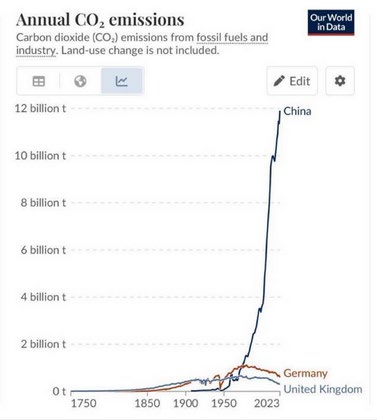
Photo of the Week
Ways Not To Think About Plastic … BUNNIES?
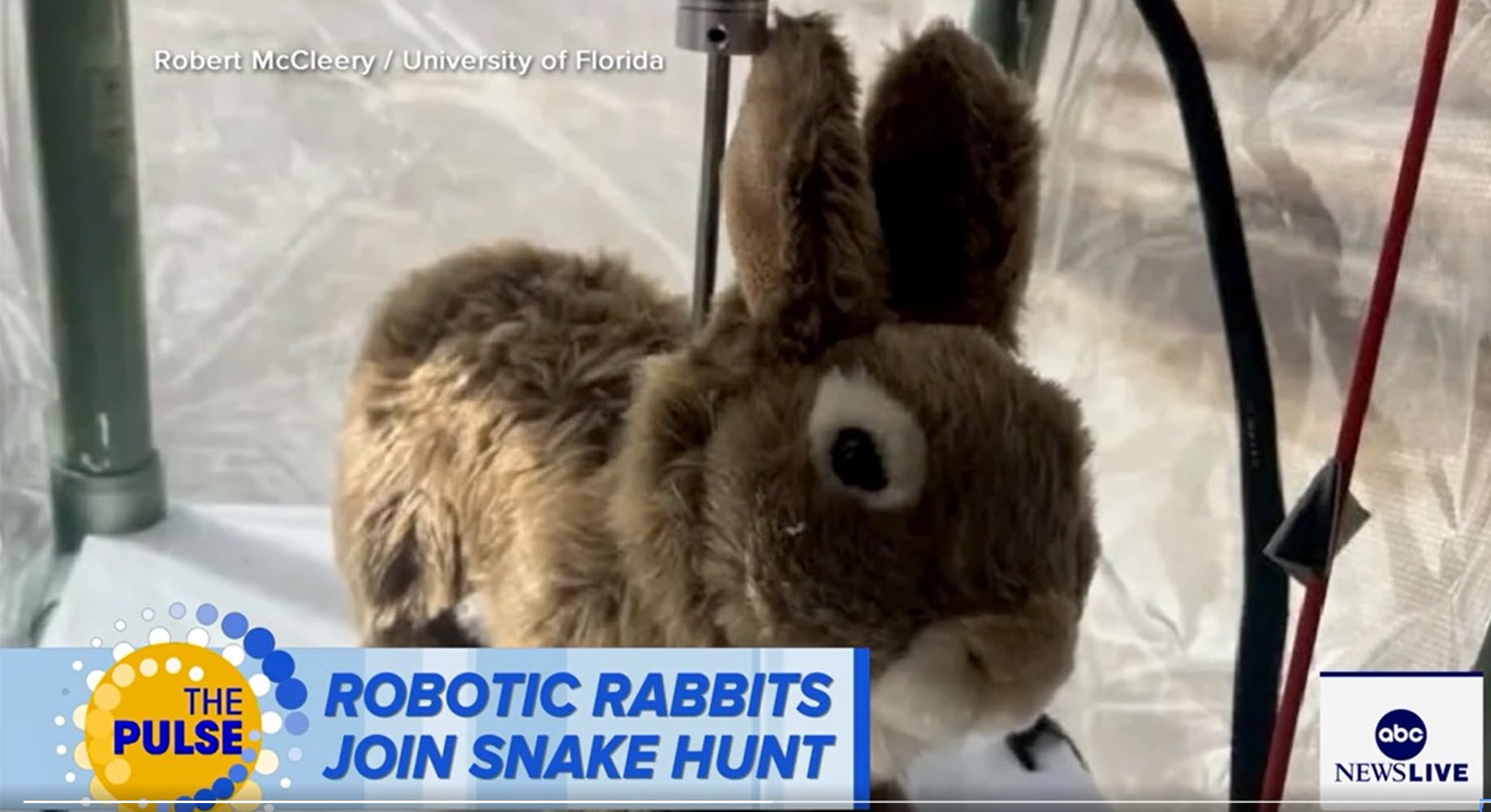
Robot rabbits in Florida battle to control invasive Burmese pythons in Everglades. They look, move and even smell like the kind of furry Everglades marsh rabbit a Burmese python would love to eat
Film, music, cultural item of the Week
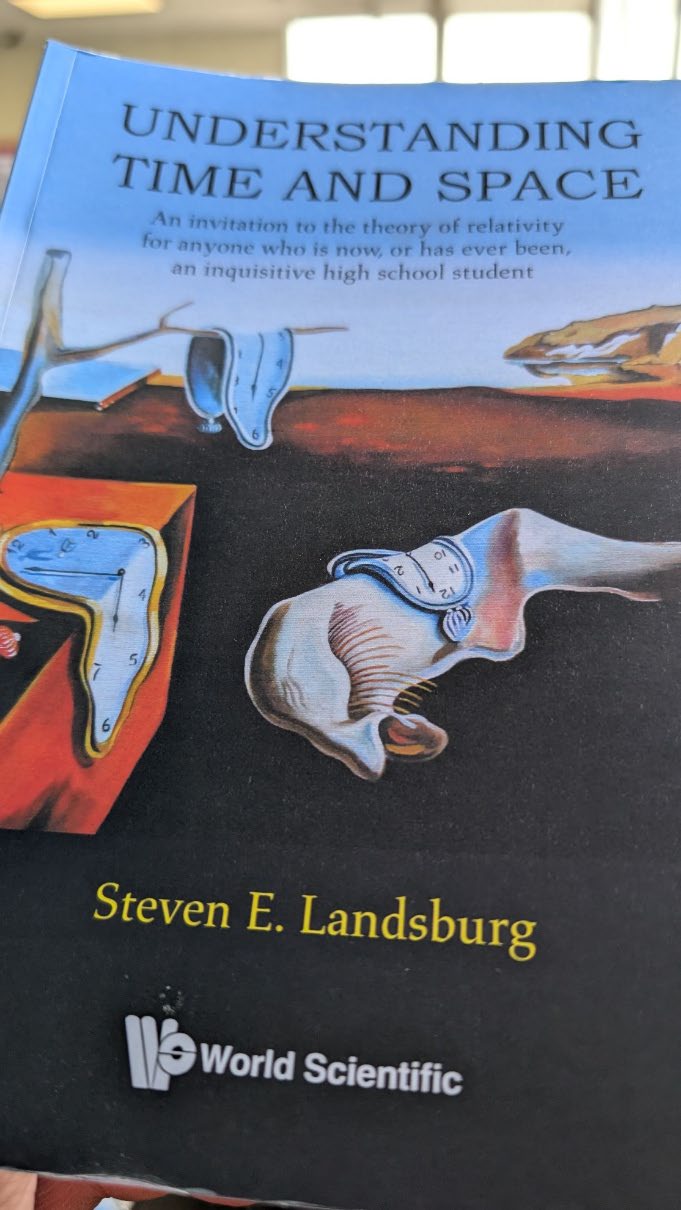
You’re never too old to learn
They Said It