Course timing and readings
Property Rights all week!
Assignments and due dates
Your week 9 project is largely a data project examining the challenge (and opportunity) to reach global net zero carbon emissions by 2050. Your week 10 project was just posted, and it is going to be everything you ever wanted to know about the Faroe Islands. There is a short documentary to watch to start the assignment, then there are some puzzling discussion questions to follow. Week 10 may be done as a group. Looking ahead to Week 11, we will be holding the First Annual Batsh!t Environment Optimist Competition. Stay tuned.
Course projects
EETT Projects: I will start reading them after Halloween weekend, will return with comments after I complete all of them.
Group Project Cheat Sheet
We have THREE group experiences in lieu of quizzes and exams.
- 1. Get Outside Project:
- a. Due November 4th.
- b. Group size between 4 and 8.
- 2. EETT (this is part one of a two-part engagement experience)
- a. Reflection 1: due as part of Week 3 RRR (Sept 14th)
- b. Reflection 2: due as part of Week 4 RRR (Sept 21st)
- c. Individual EETT Submission: due Sept 25th
- d. Group Precis: due Oct 5th
- e. Final Project: due Oct 19th
- f. Group size between 4 and 8
- 3. Interview Project (this is part two of a two-part engagement experience)
- a. Project due December 11th
- b. Group size between 4 and 8
Other class administration and availability
TA Office Hours and Info Look for an announcement from our Head TA Cailtin Lipton for an update.
- The TAs are continue to offer office hours and weekly discussion sessions which will enable you to explore class topics more deeply, and to dive into portions of the weekly class work (and possibly receive credit for doing so). No discussion session next week.
My Availability: For the most up to date info on my office hours availability, and campus whereabouts and other ways (possibly) to meet and get in touch with me, check our Office Hours Blackboard page at tiny.cc/RizzoHours. I also post some job info on there and other items to discuss. Office hours are a great place to bring your plans and ideas for your Interview project.
Please stop by our picnic lunch bunches on Mondays and Wednesdays from 11:30am to 12:45pm, they’ve been fun. Meet new people! Talk to my freshmen!
I will be out in Boston over the weekend and again mostly out of phone contact.
Upcoming Special Events
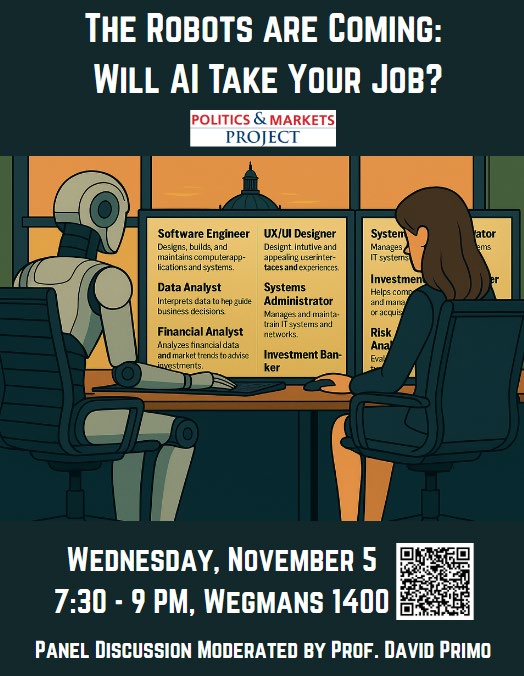
Politics and Markets Project Annual Fall Panel
What: “The Robots Are Coming: Will AI Take Your Job?
When: Wednesday, November 5th
Time: 7:30pm to 9:00pm
Where: Wegmans 1400
The Panel: The panel will feature experts with diverse perspectives on technology and the economy. Molly Kinder of the Brookings Institution studies how automation affects workers and inequality. Will Rinehart of the American Enterprise Institute focuses on how innovations like AI shape job creation. Moshe Vardi, a computer science professor at Rice University, has warned that AI will be a net job destroyer. They’re coming to Rochester to discuss how AI is changing the future of work—and what that means for young people entering the job market. There will also be an opportunity for students to ask questions during the panel.
The Department of Economics will be hosting several additional events this fall, TBA, coming soon!
Expected Guests/Topics: Paul Bloom on Empathy/Compassion; David Livingstone-Smith (philosopher); Victor Haghani (money manager)
Some Things That Captured Our Attention
The Iron Law of Climate: If it comes to living standards vs. the planet, the planet does not win. Ever. “Brazilian authorities say they addressed housing shortage for climate talks, defend oil drilling”
Should We (Have) Stockpiled Rare Earths? “This is a very big deal. China has asserted sweeping control over the entire global semiconductor supply chain, putting export license requirements on all rare earths used to manufacture advanced chips. If enforced aggressively, this policy could mean "lights out" for the USA!” A Different Take on Rare Earths
Sonic Boom! Can we reduce some climate change for the equivalent cost of $1 per ton?
“Overall, I argue that interwoven empirical findings across outcomes are aligning to paint an increasingly coherent picture of a future global economy impacted by climate change. Taking the literature as a whole, the global consequences of unmitigated climate change are likely to be substantial, unequal, negative in net economic value and potentially destabilizing.” over two decades, less than Of 1,500 climate policies adopted in 41 countries5% have resulted in any reduction of emissions.
Bad Bezos! “A $1.8 million grant from the Bezos Earth Fund will help the Cornell Lab of Ornithology's K. Lisa Yang Center for Conservation Bioacoustics develop acoustic sensors and artificial intelligence analytics to identify real-time threats to forests from illegal activities and provide insights into ecosystem health.”
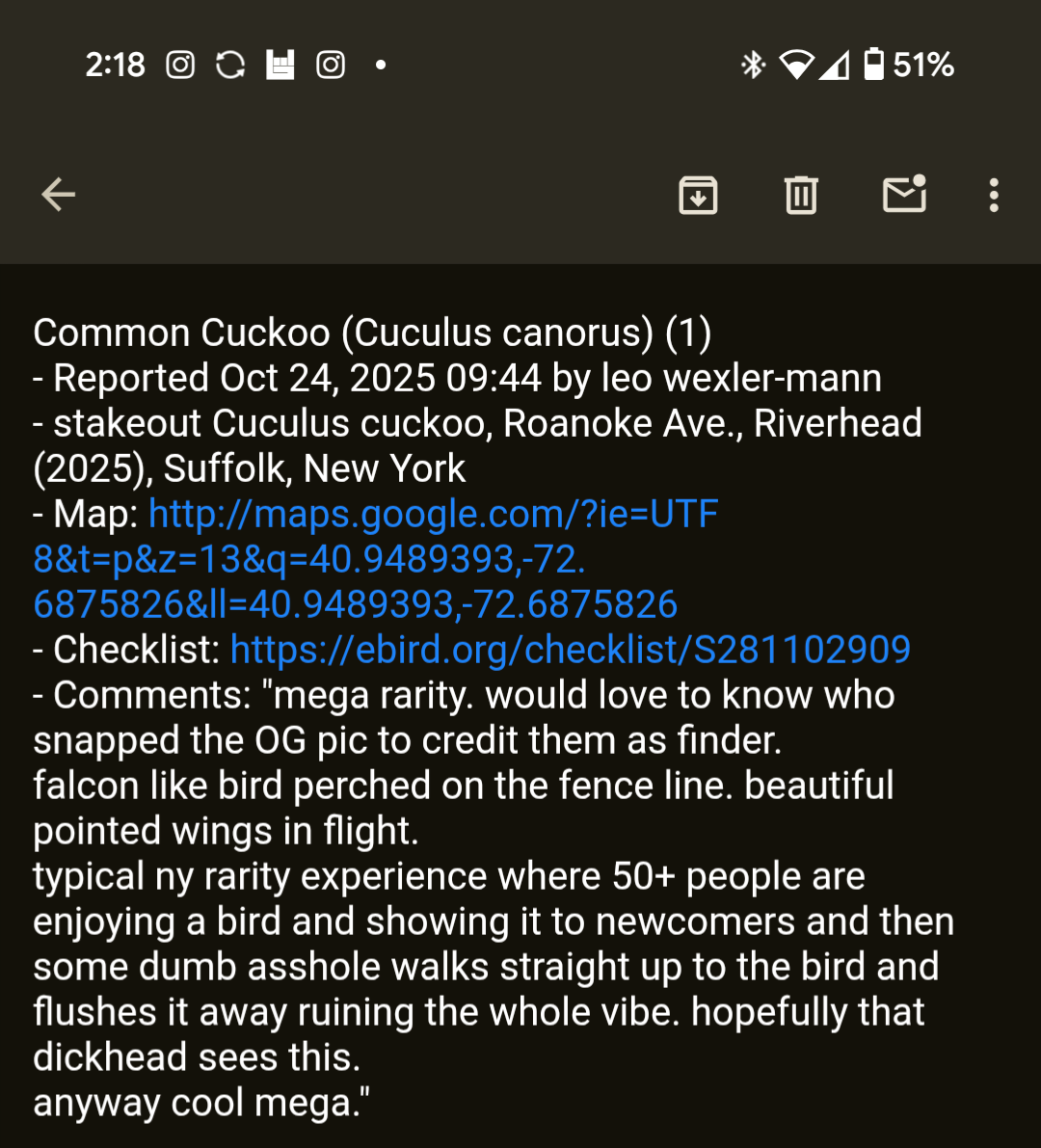
Birding Culture:
Historic Hedonics:“Property values increase 9–12 % after National Register listing but substantially decline after local district designation. New National Register districts see increased sales volume, new construction and subdivision, and construction financing.”
Seneca Lake’s Burping Booms? “The native Seneca people attributed the sounds to a deity furious with a warrior who violated sacred hunting grounds. American folklore spun a different tale: The booms were the drumbeat of a ghost of a Revolutionary War soldier in search of his regiment.” U of R’s own Professor Andreatta reports on the mysteries in the NY Times. ““They were a surprise to everyone,” Mr. Morin said. “But if these craters, or what we call pockmarks, are formed like we think, methane or other geologic gases are penetrating the ground surface and bursting like a big pimple.”
Dematerialization, 3D Aluminum Alloy Edition: “MIT engineers have developed a printable aluminum alloy that can withstand high temperatures and is five times stronger than traditionally manufactured aluminum.
Farmers Love to Hate “Moneycrisp” Apples: “But the apple had problems. It was too big, too fragile and a magnet for disease. The farmers who sampled it were quick to dismiss the finicky tree. “She’s a diva, an absolute diva,” fourth-generation Washington apple farmer Kait Thornton said of the Honeycrisp.
Thornton’s family has been farming in the same valley 20 minutes south of the Canadian border for nearly a century, and their yearly Honeycrisp crop is a painstaking ordeal. The same qualities that make the variety so delicious leave farmers griping. Its thin skin is easily punctured by its own stem, which means workers must hand-clip the fruit from the tree, cutting productivity in half. The tree tends to produce more apples than it can handle, so growers must thin out the fruit. The Thorntons spray the trees frequently to treat an endemic calcium deficiency.
And to coax the apple into developing its signature red-pink hue, workers lay out sheets of reflective material by hand. Even a healthy apple is susceptible to bitter pit, a disorder that marks the skin with black splotches and ruins the fruit’s flesh.
That, Thornton said, is just the work required to get it off the tree. The fall apple harvest supplies the market for the entire year, so shelf-life is crucial. The apple’s signature foamy texture means it is an easy bruiser and doesn’t store as well as other varieties. If in January, nine out of 10 Honeycrisps survived storage, a farmer might only get seven out of 10 by the summer.
The new printable metal is made from a mix of aluminum and other elements that the team identified using a combination of simulations and machine learning, which significantly pruned the number of possible combinations of materials to search through. While traditional methods would require simulating over 1 million possible combinations of materials, the team’s new machine learning-based approach needed only to evaluate 40 possible compositions before identifying an ideal mix for a high-strength, printable aluminum alloy”
Outfoxed, Rambo Edition: “Until then, eradicating predators in an enclosed area, while difficult, was a standard process. But Rambo was not a standard fox. It’s believed he became incredibly wary after losing his mother to a trap and his sibling to poison bait. Over four and a half years, he evaded 10,400 traps, 3,500 poison baits, 73 stakeouts, and 55 days of scent-tracking dogs. This was more than just an animal’s struggle for survival; it was a victory of wits and instinct over technology. Rambo’s impact was much bigger than just his own
survival. This single fox single-handedly delayed a multi-million dollar conservation project for years. Because of him, scientists had to change their plans and create a smaller, second safe zone inside the main area. He wasn’t just a predator; he had become a strategist dictating the project’s terms.”
Chart of the Week
The most critical aspect of the global energy transition is the replacement of fossil energy by non-fossil energy. That is easier said than done; fossil energy currently represents 80% of all energy use, and has done so for more than 60 years. One could therefore conclude that the global energy transition has not yet started.
However, we believe that the transition has started, but the change is gradual and almost imperceptible at a global level. Global energy-related emissions are most likely peaking in 2025 and will start to fall from 2026 onwards. . .
We forecast that the fossil fuel share of primary energy will reduce by more than 1% per year, from 80% today to 36% in 2060. By historical standards, that pace of change is unprecedented. However, the transition is not fast enough to reach Paris Agreement climate targets
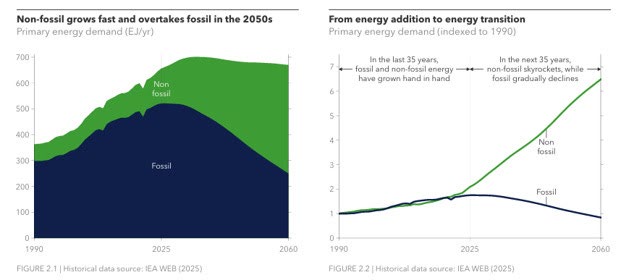
Photo of the Week
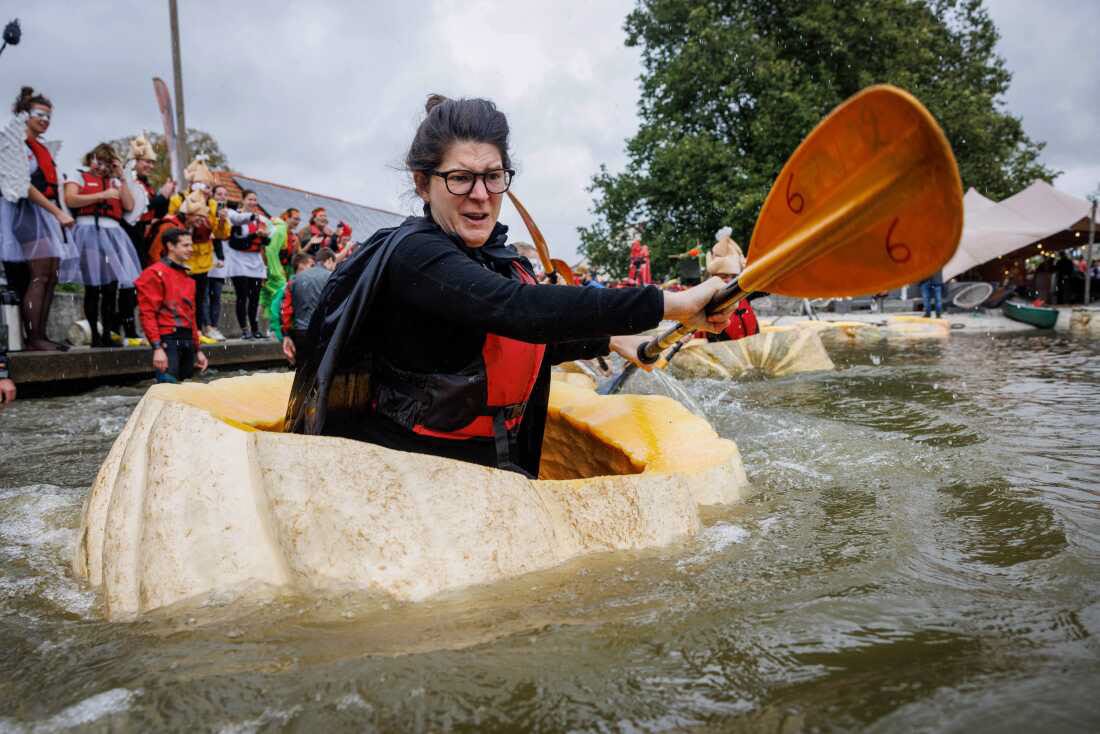
Food Waste? Pumpkin Regatta racer paddles a giant pumpkin through the water in Kasterlee, Belgium. Participants cover a
distance of 100 meters in hollowed-out pumpkins in the annual event.
Film, music, cultural item of the Week
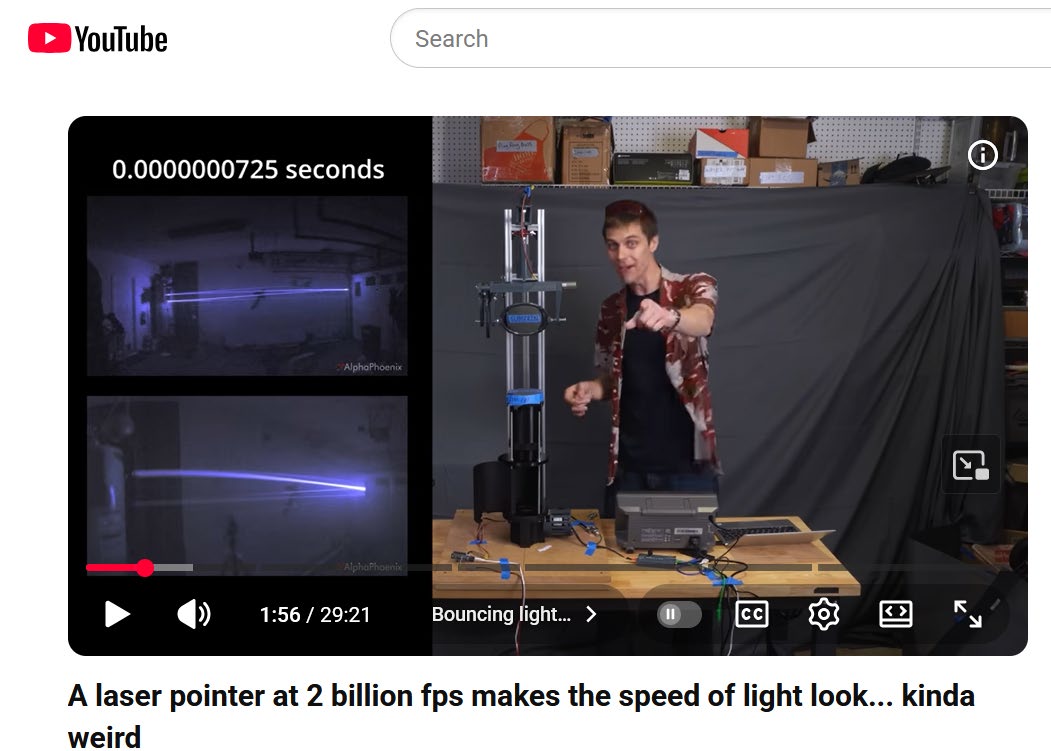
The speed of light at 2 billion frames per second
They Said It
And As the futurist Hazel Henderson put it, though: “we do not know enough to be pessimistic”. We won’t know that our problems are solvable until we solve them, we won’t solve them until we try, and we won’t try until we believe. Either way, the problems we’re facing don’t take prisoners, so we might as well go down swinging.
– Kurt Vonnegut
INTERNSHIP OPPORTUNITIES
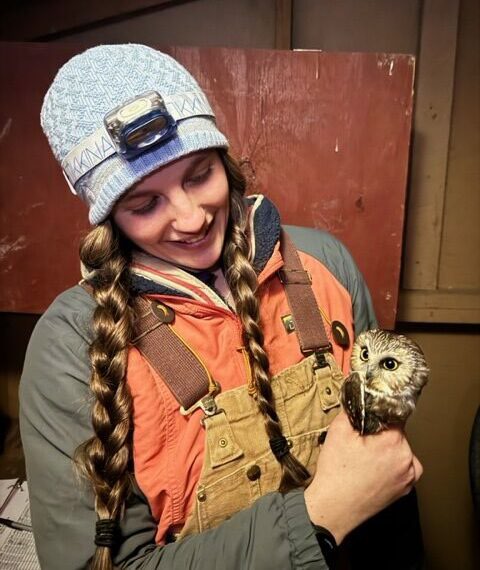
Braddock Bay Raptor Research (this is the place we gave our donation to start the year) announces the availability of two internships for the spring 2026 season.
A PDF version of the information can be downloaded here: BBRR 2026 Internships
To apply for either internship, send a letter of interest, resume and references to Daena Ford at information@bbrr.org . Applications will be accepted until all positions are filled.
Raptor Research Internship
Up to two positions available.
Objective: Provide an opportunity for an individual interested in a career in avian research to gain hands-on experience working with raptors in the field. Interns will learn about and participate in raptor banding, and raptor migration counts and surveys.
Duties/Opportunities:
Raptor Banding –
- Assist with raptor banding operations, including lure bird care, station set up and maintenance, data collection, photo documentation
- Assist with trapping and banding raptors under the supervision of a licensed bird bander
- Assist with raptor banding data entry
- Interpretation and education on site for public visitors and organized groups
Hawkwatch –
- Assist with the raptor migration count by spotting and identifying raptors in flight
- Assist with data entry, both live on-site and at day’s end into the HawkCount database
- Learn proper raptor identification and count techniques
- Interpretation and education on site for public visitors and organized groups
Owl Roost Survey –
- Collect data and observations during a daily survey of the Owl Woods portion of the management area. Focus species are Northern Saw-whet Owls and Long-eared Owls, but other species can be encountered.
Timing
- March through mid-May; start and end dates flexible.
- Part-time – Minimum of about 10 hours/week. Schedule will be set based on applicant’s availability.
Requirements
- Ability to work outdoors in a variety of weather conditions. Proper outerwear and footwear for cold weather is essential.
- Good communication skills and readiness to work with others.
- Must have own transportation.
- Optics in the form of binoculars (at least 8x) will be needed. Spotting scope is helpful as well, but not required. BBRR may be able to provide if needed.
- Bird, especially raptor identification knowledge a plus. More training will be provided.
Raptor Education Internship
Up to two positions available.
Objective: Participants will gain knowledge of and experience caring for and working with captive raptors that are used in educational programs.
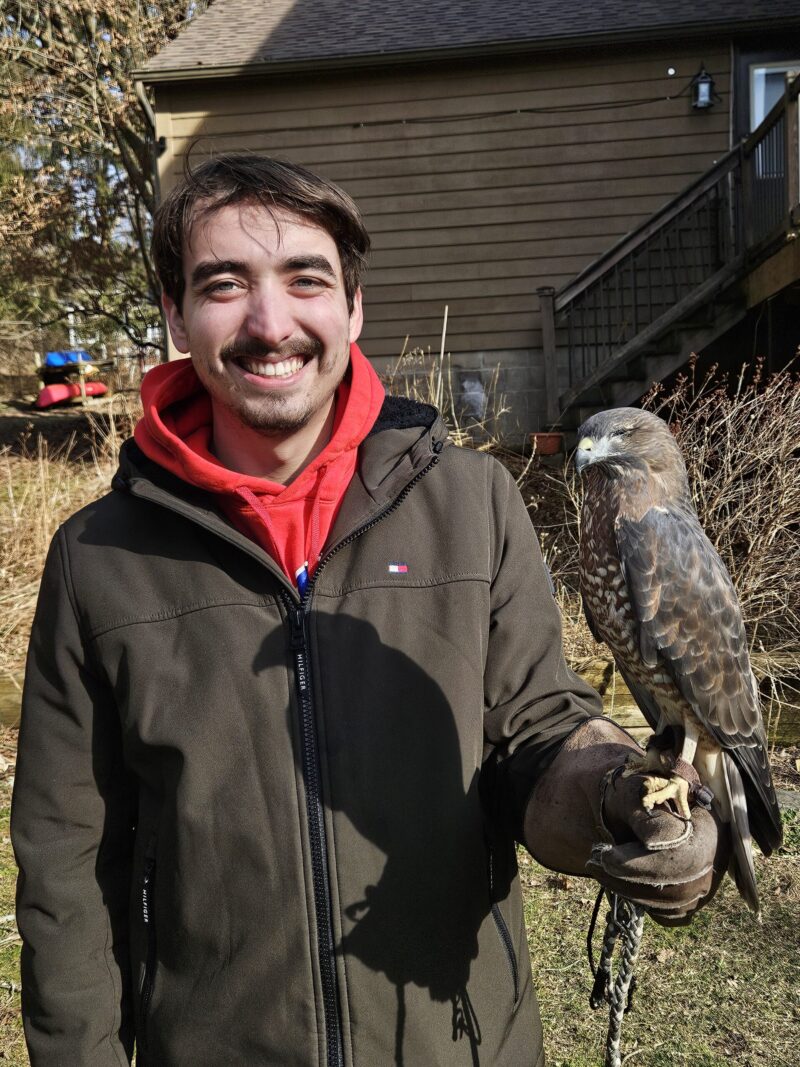
Participants also have the opportunity to gain experience in conducting presentations and leading educational programs and lessons.
Duties/Opportunities:
- Learn to care for non-releasable captive birds of prey used for educational purposes. This includes activities such as preparing food, cleaning enclosures, and assisting with health and maintenance checks on the birds.
- Learn handling and training methods for captive raptors used in education.
- Assist with outreach programming in the community utilizing education raptors.
- Lead or assist with programs at Braddock Bay, including owl prowls, banding station tours, and organized field trips.
- Participate in Bird of Prey Days event held in April.
Timing:
- mid-February-mid May. Start and end dates are flexible.
- Part-time – Minimum of about 4-6 hours/week, possibly more during the month of April. Flexible scheduling.
- Opportunity is there to extend internship into June if applicant is available.
Requirements
- Ability to work outdoors in a variety of weather conditions. Proper outerwear and footwear for cold weather is essential.
- Must have own transportation.
- Good communication skills and readiness to work with others.
- Good presentation skills.
- Experience working with animals a plus.
- Experience presenting in an educational setting (school, nature center, etc.) a plus.
- Optics in the form of binoculars (at least 8x) will be needed. BBRR may be able to provide if needed.
- Bird, especially raptor identification knowledge a plus. More training will be provided.
Daena Ford, President
Braddock Bay Raptor Research dford@bbrr.org www.bbrr.org