Course timing and readings
We jump right into class materials on Day One. We will not spend class time going over the syllabus or doing introductions or anything of that sort. Our first few weeks will be spent trying to fan away the miasma of economics apprehension, and to help you understand our goals for the course. We are not here to go through a textbook and just check the boxes, we aim to give you a full-blooded introduction to the EWOT. Why dedicate tens of thousands of dollars in tuition if you are going to get here what you can get for free in simple format online (by the way there is still a good answer to that particular question, kudos to you for taking a stab at it)?
Begin working your way through the readings in Section One. There is no particular order to them, and as you will see that none of these is "required" in the traditional sense of the term. If you wish to only read a little bit, please focus on i, Pencil. The Engerman paper is a nice historical examination of what you are about to get yourselves into and the short Otteson Chapter is a very good attempt to define some terms that are ill-tossed around. Of course, there is never a wrong time to go through the materials in the Ur-Readings section.
Our lectures do not track the readings and vice-versa, but they are not there for no reason.
See “Readings, Videos and Reserves” for the class reading list. This will be the first of a zillion times you will hear me curse Blackboard – it is not very user friendly. It won’t easily let me create an html reading list, but I hacked it together a bit. There is a word doc you can download that has live links. On much of it, you need to be logged into our library and Rochester VPN/campus network to access the professional journals. Creative internet searching can probably find most of the material if you did want to navigate through our library or can’t get a link to work. Please read my comments on both the reading list and the syllabus regarding what I think of the readings and how you should engage with them.
Finally, USE CHAT GPT and its sister applications to take advantage of what is in the reading list. It is easy to find software now that you can feed one or more readings in and get summaries, comparisons, and more. With the application of AI, there is almost no excuse for not being engaged in some manner with our reading list. In fact, the Chat is a useful agent to help expand the list, and to have it sync up with materials you may be covering in other classes.
Assignments and due dates
And the treat you’ve all been waiting for … Week One
Assignment
Your very first course assignments are posted on Blackboard
under "Weekly Updates and Assignments 2025." Look for both a research
and a writing (that sounds dreadful, how about "Rumination?")
assignment.
For this week only, you are to choose EITHER the rumination or the research assignment. In all subsequent weeks we will have you complete both assignments.
The assignment is due the first Sunday night of the semester, August 31st, before 6:59pm. While I tend to write a lot myself, we do not expect you to. There are no limits or word specifications on the work, we ask that you spend the time early and often to engage with the questions and even chat about them with your peers.
You can submit your assignment on Blackboard under "Weekly Updates and Assignments 2025" then to "Week One Class Update and Assignment" and then to "Week One Rumination Assignment" if you choose the Rumination and “Week One Research Assignment" if you choose the Research.
Normally, you can expect your assignments to be posted two Fridays prior to their due dates. Hence, an assignment that is due on September 7th is likely to be posted on Friday, August 29th.
Assignment Planning for the Term, and Exemptions
Your week one assignment will NOT be counted in your course grade.
We are using it to give you a flavor for the kinds of weekly work you will be doing, to practice submitting your work, to get used to navigating blackboard, and to have the TAs provide you with a little feedback on your work before you dive deeply into the semester work.
If you choose not to submit week one homework, there is no penalty. That is a choice you make for yourself.
We will go live in Week two with two big assignments.
Planning for your exemptions, and what work to do?
Note there are 15 total weeks in the term.
We will assign work every week.
We won’t count week one in course grades.
Students are required to skips three weeks of the ruminations and research.
Thus, by the end of the term students have to do ELEVEN rumination assignments and ELEVEN research assignments, no more, no less.
Students do not have to take skips on BOTH parts in the same week.
If students have time troubles, or something comes up, use the exemptions then.
If students feel like their work is incomplete or they are going to hand it in (even one second) late, use the exemptions.
I recommend being smart about holding onto exemptions for when you are really busy later in the term. Note that if there is a week and you take an exemption, I may reproduce the skipped assignment for a future week.
Finally, it is possible that one or more weeks of homework is a “double” assignment. In those cases a skipped assignment would take up two exemptions.
If you choose an exemption, you do not need to do anything – leave your submission BLANK. We will enter a zero in that week of work. At the end of the term, if you did all of your work, you should have grades in 11 weeks and zeroes in three weeks. We only penalize students who have four or more weeks of zeros.
Exam information
Please make note of the Exam dates and times. The exams are held outside of class-time. Do not make travel arrangements that conflict with either of our two midterms or our final exam. Your first exam is on Friday, September 26th at 2pm. Yes, “it is on the test,” and be prepared to explain your thinking in clear, concise writing. Yes, we have a make-up slot for students with conflicts. And yes, we make arrangements for students traveling for sports or other school functions. No, we do not make arrangements if you are not on campus for non-UR reasons.
Recitation information
If you have not already done so, please register for a weekly recitation. There is more information about these on the syllabus and the "Recitations" link on Blackboard. These are not merely reviews of what we do in class. You can see which recitations have openings in it by looking at the course registration information from the registrar. The recitations are more enjoyable than the classes in my view, and we have worked hard to find space around campus and times during the week to accommodate ~230 students and 14 Teaching Assistants. This was no easy task. The sections are each capped at 24, and you may not attend recitations other than the one you registered for. We have scheduled several evening recitations - so while those may not be the most convenient for you, we are hoping that there are enough times scheduled so as to make it possible for every student to attend a recitation without conflict. Please do not send us long explanations for why you MUST MUST MUST get into a particular recitation. We understand that you are busy and have many other things going on. But this is true for 230 classmates as well. We do our best to accommodate you with the broad offerings, so please find one that you can attend, and I hope you take the chance to get to engage with the TAs and your peers in those sessions.
THERE IS recitation this week. Our first recitation sections will begin on Wednesday, August 27th Please be on the lookout for a welcome e-mail and additional information from your recitation TA.
What do I bring to recitation? Sticks, eyes, feet and brains.
Other class admin, TA hours
Read the Syllabus
The syllabus and all class materials are on the Blackboard
website. Please read the syllabus and related course descriptions
carefully. All policies related to grades, assignments, etc. are on the
syllabus. Please think twice and three-times before sending
admin-related emails that are covered by the syllabus. For example,
“What date and time is our first midterm?”
Important Dates: Please mark down all important class dates on your calendars, iPhones, Androids, etc. immediately. These dates are posted on Blackboard course page calendar and at the back of the class syllabus. You will have assignments due every Sunday of the semester, and the times and dates of the exams are set in stone.
Class Communication: I will try my best not to email the entire class more than once per week. So please look for my email with a weekly announcement most Fridays. That said, I like to add info and ideas to the website as do our TAs so keep on the lookout for that. Further, please take care to check into the course page and calendar and listen to whatever I am saying in lecture to stay on top of what we are up to.
Read the Syllabus: Really.
TA Office Hours
Look for an announcement from our Head TA Katherine Watai.
Katherine and I text and email and call and meet very regularly to go
over every aspect of the course, and she is privy to my intentions for
the class. Unless you hear something directly from either myself or
Katherine about the class, well, you should remain skeptical. I work
extensively with Katherine so that she and our TA team and myself are
all on the same page, but you will be best served to pay close attention
to my announcements, to what I say in class and to what Katherine says
in person and in her announcements.
My Availability
Call or text me if you would like to chat over the weekend, I
will not be on my computer. I can be reached at 585-478-2677.
For the most up to date info on my office hours availability, and campus whereabouts and other ways (possibly) to meet and get in touch with me, check this announcements page each week.
To access our updated office hours schedule (and for additional econ information including internships, grad school, special events, etc.) please subscribe to our Office Hours Blackboard page at tiny.cc/RizzoHours. I update my calendar weekly on that page, and include other sometimes useful information on it for you.
If you have never accessed the page, Blackboard has a “register for this course” prompt that you will need to select in order to get in for the first time.
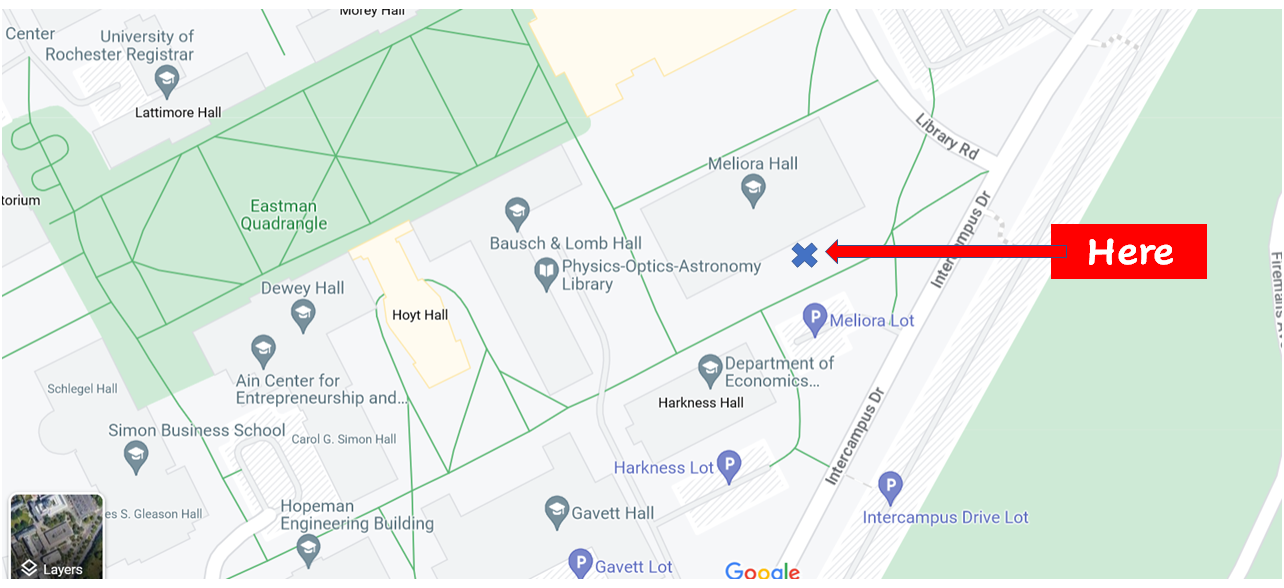
We walk over to the picnic tables right after the 10:25 class gets out (I may run up to my office first to grab extra folding chairs). Folks tend to drop in at all times from anywhere from 2 minutes to 75 minutes, so we hope to see you outside of class.
REMOTE STUDENTS with Visa Challenges
We will offer remote class for the first five weeks of the term
We will offer remote recitation: please email Katherine to arrange a time
We will offer remote office hour: please email Katherine to find times that work
Please send our Head TA, Katherine Watai, an email at kwatai@u.rochester.edu with information about what time zone you are located in, and to help her coordinate a recitation time and office hour times that may work for all of your schedules
“FREE” Access to Both the NY Times and the Wall Street Journal
To access the RCL’s subscription to NYTimes.com:
To set up an account with the RCL’s subscription, go to
https://nytimesineducation.com/access-nyt/, then enter “University of Rochester”
Follow the prompts on the next page. Be sure to use your “rochester.edu” email address when setting up your account. If you are already a paid subscriber, you will need to cancel before linking to the institution account.
To access the Wall Street Journal:
Use the link: WSJ.COM/ROCHESTER.
Enter your university credentials and create your WSJ account.
Upcoming Special Events
Department of Economics Engerman Lecture
Who: Robert Margo of Boston University
A specialist in the history of the American economy with particular emphasis on the economic history of African-Americans, Margo is the author or co-author of 5 books and over 150 articles, book chapters and book reviews. He has served on the editorial boards of many journals, including the Journal of Economic History, the American Economic Review, and the Quarterly Journal of Economics; and he has served as editor or co-editor of the Southern Economic Journal and of Explorations in Economic History. He was elected a Fellow of the Cliometric Society in 2012.
Additionally, Margo is an accomplished performer on classical guitar, mandolin, renaissance and baroque lutes. In the Boston area, he performs regularly with the Providence (Rhode Island) Mandolin Orchestra and the New American Mandolin Ensemble.
When: Wednesday, October 15th
Where: TBD
What: TBD
The Politics and Markets Project, Hosted by Professor David Primo
Title: Topic TBD (this will be a moderated panel discussion, likely on immigration)
Date: Wednesday, November 5th
Time: 7:30pm to 8:30pm
Location: Wegmans Hall, 1400.
The Department of Economics will be hosting several additional events this fall, TBA, coming soon!
Expected Guests/Topics: Lorenzo Caliendo (late September); Paul Bloom on Empathy/Compassion; David Livingstone-Smith (philosopher); Victor Haghani (money manager)
Some Items That Caught Our Attention
Wanna Get An A? Try this.
Wanna Get An A? Try this too,
Wanna Get Outta Here? “Results show that from 2003 to 2022, average time spent at home among American adults has risen by one hour and 39 minutes in a typical day. Time at home has risen for every subset of the population and for virtually all activities. Preliminary analysis indicates that time at home is associated with lower levels of happiness and less meaning, suggesting the need for enhanced empirical attention to this major shift in the setting of American life.”
“A Prompt in Every Pot …” ChatGPT for President?
Elsewhere in GPT Land: “This seems like a wake-up call both for grad students and faculty in economics (talking my own book here a little bit...): share of economics papers that is ABOUT or USES AI increased 10X to 5% in 5 years and growth is basically vertical. Curricula should adjust accordingly..” My own view is that tools like AI are overstated in importance early on, and understated in the long run.
Is the “For Pleasure” Part the Rub? “We measure reading for pleasure and reading with children from 2003 to 2023, using a nationally representative sample from the American Time Use Survey (n = 236,270). We found marked declines in the proportion of individuals reading for pleasure daily in the US, with decreases of 3% per year. There were disparities across population groups, with widening gaps for those of Black (vs. White) race, with lower education levels and less annual income.”
“To the Socialists of All Parties” Trump/Neocon edition: “The Trump administration is pursuing federal ownership stakes in companies such as Intel and U.S. Steel, ostensibly to advance national security and domestic manufacturing. … Such actions pave the way for future administrations to impose DEI, environmental and regulatory mandates on businesses through back-door control … Recent developments—a proposed stake in Intel to accelerate chip production, a “golden share” granting veto power over many of U.S. Steel’s decisions following its acquisition by Nippon Steel, and the Pentagon’s 15% equity in the rare-earth mining company MP Materials—would all expand federal control over the means of production.”
We Must STOP the Scourge of … Hair Salons? “Khalilah Few invested her life savings in a dream: opening a hair salon in Clayton County, Georgia. There was no reason for her to think the county would stop her from opening in the long-empty retail space she rented and renovated. But the county claimed the area was already “saturated” with hair salons and so would not fit in with their “smart growth” plan. That’s not just wrong—it’s blatantly unconstitutional. The denial comes from a first-come-first-protected mentality that favors existing businesses just because they happened to open first. The Georgia Constitution protects people’s right to practice a lawful occupation, and Clayton County has violated that right.”
Let me rephrase this – we get bad economic policy because legislatures and voters are equally economically illiterate. We endure bad cultural battles because elected officials are mo0re liberal culturally than their constituents.
Dog Bites Man, Tariff Edition: “Yale Budget Lab economists predict that "the price level from all 2025 tariffs rises by 1.8% in the short-run, the equivalent of an average per household income loss of $2,400 in 2025$."
The “experts” think it’s phones, I think it’s deeper than that: “Young people today are less likely to be in a stable relationship than they were a few decades ago. While nearly 4 in 5 Boomers had a romantic partner for some or all of their teenage years, for example, only about half of Gen Zers had a boyfriend or girlfriend in high school—and there are strong indications that this decline in couple formation persists as young people become adults. According to a 2023 Pew survey, for example, the share of 40-year-olds who have never been married has significantly increased over the course of the past decade.”
Will AI and Automation Crush Your Wages? Short answer? No. “Our findings challenge the common assumption that automation exposure equates to wage losses.”
The Big Business of Small Business: “This Article offers the first comprehensive account of how federal law, in ways both conspicuous and obscure, systematically privileges small businesses. Small firms enjoy exclusive access to government grants and loans, preferential treatment in federal contracting, and exemptions from regulations that constrain their larger competitors. Agencies must consider their interests during rulemaking and, in some instances, subsidize their participation in that process. In total, as this Article documents for the first time, more than 1,300 statutory provisions explicitly confer legal advantages on small firms.”
Cash transfers (in Kenya) save infant lives.
But cash transfers (in the US) fail?
Go On, Take the Money and Run? A $1,000 UBI was found to: “The transfer caused total individual income to fall by about $1,500/year relative to the control group, excluding the transfers. The program resulted in a 2.0 percentage point decrease in labor market participation for participants and a 1.3-1.4 hour per week reduction in labor hours, with participants’ partners reducing their hours worked by a comparable amount”
New York State Mandates Syllabus Language: in other news, “Effects of checklist removal do not appear to come from workers having more time for production, but rather coincide with improvements in employee trust and commitment. Following the RCT, the firm implemented firmwide reductions in monitoring, eliminating a checklist regarded as demeaning, but keeping a checklist that helps coordinate production.”
Markets in Everything: Professional Hinge profile writers
Nope, I’m Just a Dope: "Becoming a university professor, however, is a pretty good way of exempting oneself from suspicion of outright or base stupidity. When university professors do stupid things, people don’t say to them “oh my god, you’re so stupid,” or “stop being such an idiot,” instead they start making excuses, like “there he goes with his head in the clouds again,” or “he must have more important things on his mind.” In other words, they give you a free pass. Not only can you get away with being stupid, you wind up with social license to become even more stupid."
Tic Tacs Cause Bad Breath!
* * * * *
Chart of the Week
Who Needs College? Meet the University of Noplace Unicorns
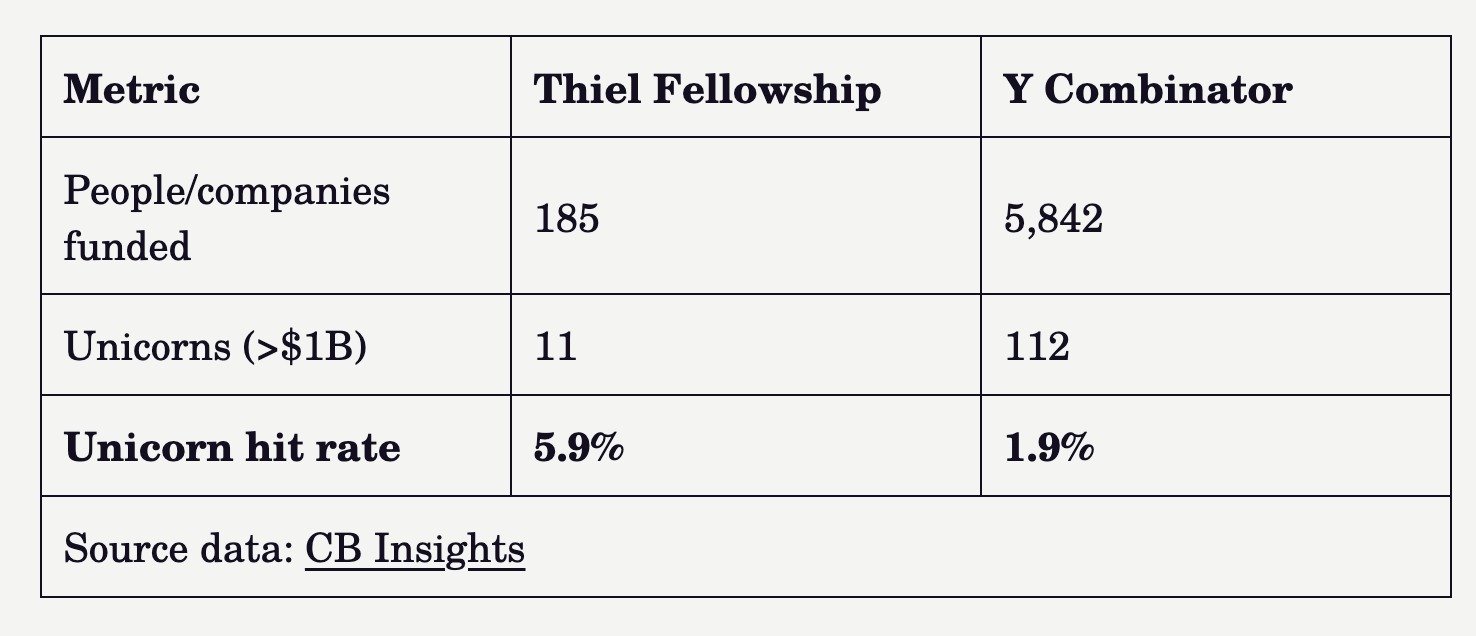
The success of the “don’t go to college” fellowships at identifying top talent and promoting cultural change, it is more successful than the most famous incubator.
Photo of the Week
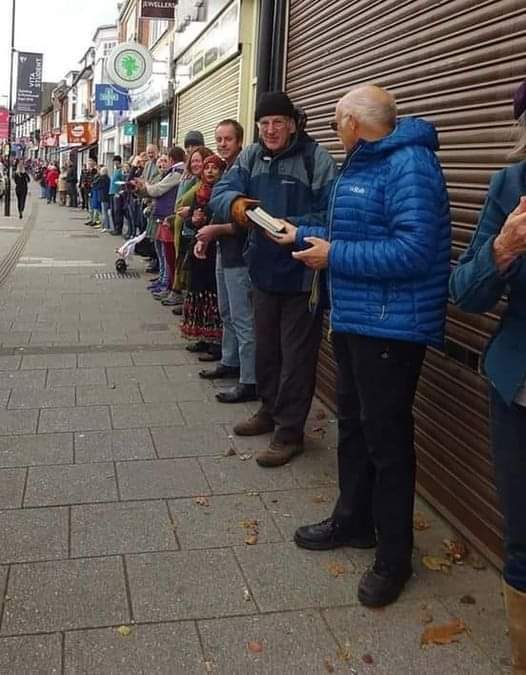
“A bookshop owner in Southampton has asked for help as he moves his stock due to high rent and wants to move the books to the new location. The old owner was surprised by the sight of more than 250 young people, elderly, and people with special needs who turned up to form a human chain where they took thousands of books, and transferred them hand in hand from the old place to the new place 500 feet down the road. The job was done in just an hour.”
Film, music, cultural item of the Week
Instead of getting this announcement written earlier, I stayed up late and watched Alex Honnold in Free Solo, “Alex Honnold is known for his exceptional ability to climb without fear, and this is linked to his unusual brain activity, specifically within the amygdala, the brain region associated with processing fear. While not a condition, fMRI scans reveal that his amygdala shows minimal activation when exposed to fear-inducing stimuli, unlike typical individuals. This reduced fear response is not a diagnosed condition but rather a characteristic that researchers have observed and studied.”
They Said It
The Meaning of an Education …
You cannot get educated by this self-propagating system in which people study to pass exams, and teach others to pass exams, but nobody knows anything. You learn something by doing it yourself, by asking questions, by thinking, and by experimenting.
Richard Feynman