Course timing and readings
We will stay in Section 1, Section A in the reading list and may start B by the end of the week. Please make your way through the readings and other related materials at your own pace as I lecture. Please read the syllabus and top of the reading list to see my comments on what to read for class and how to read. Quick answer: try to keep pace with the starred items, but read as little or as much as engages you, the material is not exactly what I cover in class. If you have not already done so, please read the short piece called, “I, Pencil.”
No Class Monday
Labor Day is Monday, so sadly I won’t be seeing you again until
next Wednesday.
Assignments and due dates
This Sunday night your two “practice” week one assignments are due. I have already posted your Week Two Rumination, and you can expect your Week Two Research by the end of the day Saturday.
Please look at them sooner than later as we are expecting you to think a lot about them. The assignments (especially the research assignment) are intended to be done individually as I think you will get more out of them by struggling through them, but I encourage you to have lunch and coffee and chat with your friends about some of the ideas from the writing assignment. Note that your task on the research assignment is not to prove to us your favorite theory for the rise in obesity or to provide all of the arguments people may be giving about it, it is much more straightforward - tell us what the economic research is saying about it. They are NOT SHORT. So please make time for them.
Recitation information
Thank you for your engagement in recitation, we DO have recitation next week, and it will be exploring the murky waters of “high causal density” in social science. One way to frame it is, if I made you take any social problem, what lever would you pull to “fix” it? How would you know? The recitations are a great chance to meet your peers in a small setting, please go!
Other class admin, TA hours
Some Advice
Read through your notes casually once per week – this makes
exam preparation go much more smoothly.
Read the Syllabus
The syllabus and all class materials are on the Blackboard
website. Please read the syllabus and related course descriptions
carefully. All policies related to grades, assignments, etc. are on the
syllabus. Please think twice and three-times before sending
admin-related emails that are covered by the syllabus. For example,
“What date and time is our first midterm?”
TA Office Hours
Look for an announcement from Katherine. We are going to be
offering a wide range of hours, including times to come and work on
supply and demand applications from our early lectures – it will be a
good way to connect these introductory “stories” into the more concrete
economic theory we will get to by the end of the course.
My Availability
I am going to be off of electronics until Monday night. Call or
text me then if you would like to chat as I will not be on my computer.
I can be reached at 585-478-2677.
To access our updated office hours schedule (and for additional econ information including internships, grad school, special events, etc.) please subscribe to our Office Hours Blackboard page at tiny.cc/RizzoHours. I update my calendar weekly on that page, and include other sometimes useful information on it for you.
If you have never accessed the page, Blackboard has a “register for this course” prompt that you will need to select in order to get in for the first time.
We walk over to the picnic tables right after the 10:25 class gets out (I may run up to my office first to grab extra folding chairs). Folks tend to drop in at all times from anywhere from 2 minutes to 75 minutes, so we hope to see you outside of class.
Upcoming Special Events
Department of Economics Engerman Lecture
Who: Robert Margo of Boston University
A specialist in the history of the American economy with particular emphasis on the economic history of African-Americans, Margo is the author or co-author of 5 books and over 150 articles, book chapters and book reviews. He has served on the editorial boards of many journals, including the Journal of Economic History, the American Economic Review, and the Quarterly Journal of Economics; and he has served as editor or co-editor of the Southern Economic Journal and of Explorations in Economic History. He was elected a Fellow of the Cliometric Society in 2012.
Additionally, Margo is an accomplished performer on classical guitar, mandolin, renaissance and baroque lutes. In the Boston area, he performs regularly with the Providence (Rhode Island) Mandolin Orchestra and the New American Mandolin Ensemble.
When: Wednesday, October 15th
Where: TBD
What: TBD
The Politics and Markets Project, Hosted by Professor David Primo
Title: Topic TBD (this will be a moderated panel discussion, likely on immigration)
Date: Wednesday, November 5th
Time: 7:30pm to 8:30pm
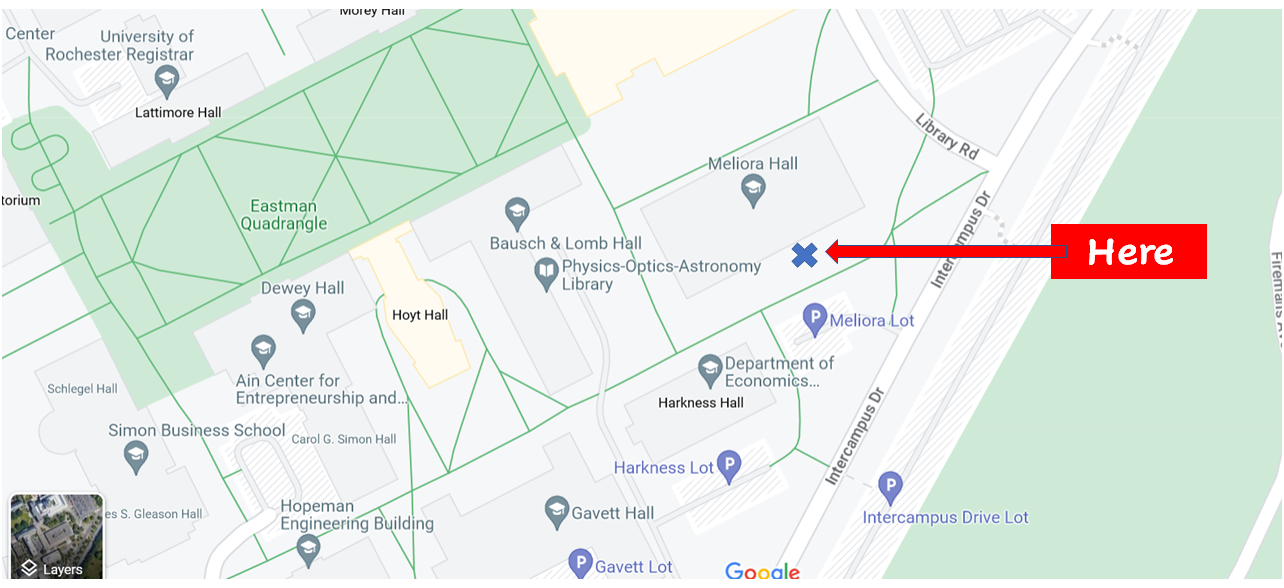
Location: Wegmans Hall, 1400.
The Department of Economics will be hosting several additional events this fall, TBA, coming soon!
Expected Guests/Topics: Lorenzo Caliendo (late September); Paul Bloom on Empathy/Compassion; David Livingstone-Smith (philosopher); Victor Haghani (money manager)
Some Items That Caught Our Attention
Nonprofit hospitals are not governed well.
Should we want More Nepotism in Government? “"Italy’s chronic unemployment problem has been thrown into sharp relief after 85,000 people applied for 30 jobs at a bank [. . . ] The work is not glamorous – one duty is feeding cash into machines that can distinguish banknotes that are counterfeit or so worn out that they should no longer be in circulation. The Bank of Italy whittled down the applicants to a “shortlist” of 8,000, all of them first-class graduates with a solid academic record behind them. They will have to sit a gruelling examination in which they will be tested on statistics, mathematics, economics and English [. . . ] The high level of interest was a reflection of the state of the economy but also of the Italian obsession with securing “un posto fisso” – a permanent job.”
The Almost Nearly Perfect People: “Our analysis suggests that income equality in the Nordics is largely driven by a significant compression of hourly wages, reducing returns to labor market skills and education. This appears to result from a wage bargaining system characterized by strong coordination within and across industries. This finding challenges other commonly cited explanations for Nordic income equality, such as redistribution through the tax transfer system, public spending on goods that complement employment, and public policies promoting equal skills and human capital.”
Oh, what was that? I was texting my friend.
GPTZero … designed by an undergrad. Model where this entire game ends.
To Specialize or Not to Specialize – Or who do firms hold the most power over? “Chief among them is that employers will apply larger wage markdowns to workers with greater comparative advantage at their firm. This leads to stronger monopsony power over more productive workers, provided the workers’ comparative advantage aligns with their absolute advantage” (from a new paper by U of R’s Professor Bils)
A Bridge Too Far … e-Sticky Notes?
Department of Uh Oh: “We study racial disparities in police use of force. A pervasive issue in studies of policing is that the available data are selected by the police. As a result, disparities computed in the observed sample may be biased if selection into the data differs by race. We develop a framework and econometric strategy for correcting this bias, using variation across officers in enforcement intensity to identify the racial composition of the unobserved population at risk of selection. Using detailed administrative data on arrests and force incidents from Chicago and Seattle, we find that Black civilians comprise 56 percent of arrestees but about 49 percent of potential arrestees. Correcting for sample selection doubles our measure of the racial disparity in force rates. Decompositions of the corrected force disparity reveal that about 70 percent is unexplained by other demographic and incident characteristics, suggesting an important role for officer discrimination.”
PulseOx Problems: “We compare care for Black versus white patients following pulse oximetry, a widely-used device for measuring blood oxygen levels which over-estimates oxygen saturation in darker-skinned patients. Black patients are therefore medically more appropriate for follow-up care than white patients with the same pulse oximetry reading. Yet, using data from the Veterans Health Administration on 3.5 million emergency department visits between 2014 and 2018, we find that Black patients systematically receive lower rates of follow-up care than white patients with the same reading.”
Does Higher Inequality Increase Upward Mobility?
And the Wall Street Journal is Not Exactly Anti-Capitalist and Anti-American: “"The farm equipment maker is an American manufacturer that Republicans say tariffs will help. Maybe not. The Moline, Ill., company is laying off 238 workers at three factories in Moline, East Moline, and Waterloo, Iowa, in the coming weeks. "This month the company reported a 26% drop in net income and 9% decline in sales, owing to lower commodity prices and higher tariffs. 'Tariff costs in the quarter were approximately $200 million, which brings us to roughly $300 million in tariff expense year to date,' said director of investor relations Josh Beal. "Deere expects the pretax damage from tariffs to reach $600 million in the current fiscal year, up from a previous forecast of $500 million. The hits are coming from President Trump’s tariffs on India, the European Union and his 50% border tax on steel and aluminum. The costs hit Deere’s earnings and ultimately employment. What was that again about the New GOP and the working class?
"This tariff damage isn’t surprising since many U.S. manufacturers rely to some extent on imports of components and raw materials. Caterpillar Inc., another great U.S. manufacturer, has said tariff-related costs could reach $1.5 billion in 2025, including as much as $500 million in the third quarter. Tariffs raise costs, and their uncertain implementation has customers of the equipment makers more cautious in their investments."
* * * * *
Chart of the Week
Declining Birth Rates by Political Party – if you are concerned about climate change and choose not to have children, the people of the future will care less about climate change
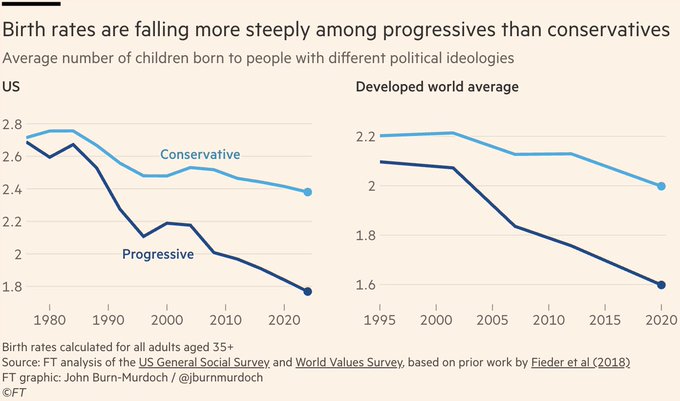
Photo of the Week
…the federal government did something extraordinary: It committed more than $140 billion toward the region’s recovery. Adjusted for inflation, that’s more than was spent on the post-World War II Marshall Plan to rebuild Europe or for the rebuilding of Lower Manhattan after the Sept. 11 attacks. It remains the largest post-disaster domestic recovery effort in U.S. history… Today, New Orleans is smaller, poorer and more unequal than before the storm. It hasn’t rebuilt a durable middle class, and lacks basic services and a major economic engine outside of its storied tourism industry.
The core problem was the inability to turn abundant resources into a clear vision backed by political will. Federal dollars were funneled into a maze of state agencies and local governments with clashing priorities, vague metrics and near-zero accountability. Billions went to contractors and government consultants services such as schools, transit, health care and housing were neglected. For example, one firm, ICF International, received nearly $1 billion to administer Road Home, the oft-criticized state program to rebuild houses.”

Film, music, cultural item of the Week
The last of the Soho Artist Lofts
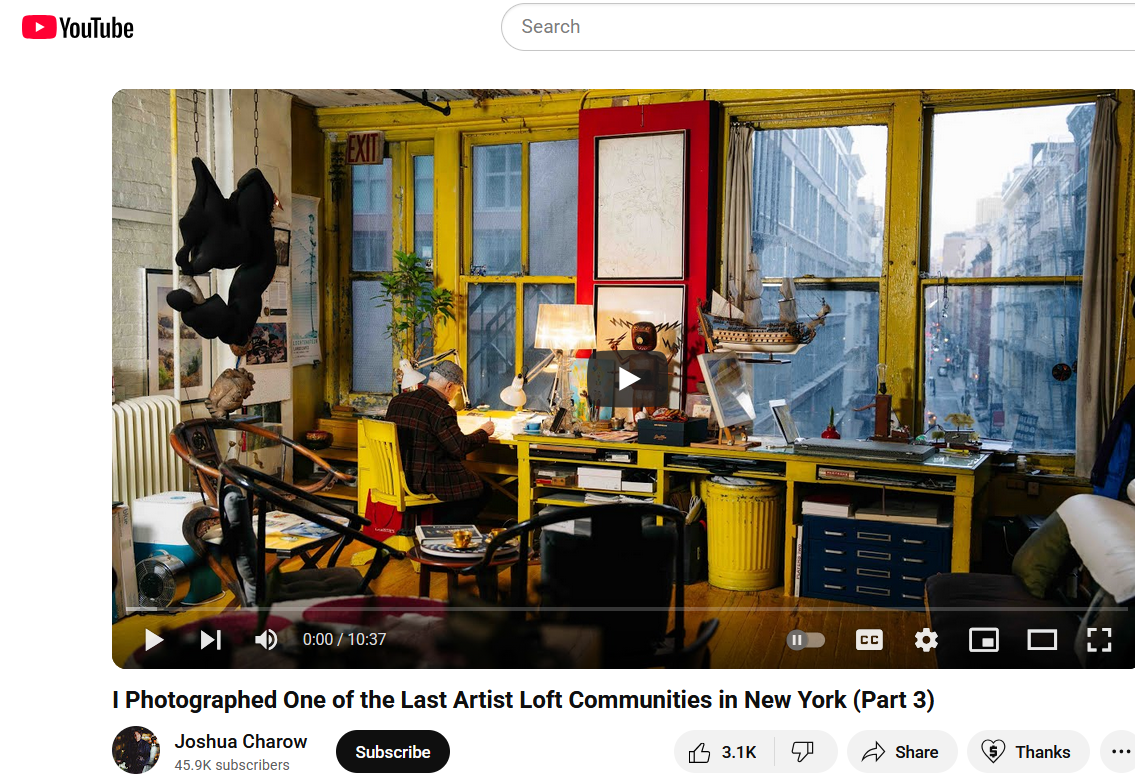
“The first roaches I had ever seen … were on my face … THOUSANDS” … I learned how to deal with roaches. … “ I didn’t have a refrigerator, or hot water for 35 years … but I got what I wanted … I made the choice …”
They Said It
We Come to the End of the Dog Days of Summer ( “…when the seas boil, wine turns sour, dogs grow mad, and all creatures become languid, causing to man burning fevers, hysterics, and phrensies”…)
If at the rising of the Dogstar rain should abound, and if the Etesian winds from the northeast fail not to come, it may be hoped that the diseases will terminate, and autumn prove healthy
Hippocrates (of Medicine fame)