Human Capital for Humans
A Department of Economics special guest lecture with Pablo Peña of the University of Chicago, moderated by U of R Economics undergraduate Isaac Miller.
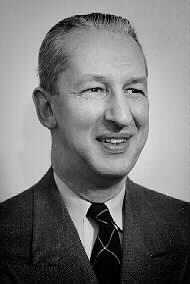
Why do people marry, have kids, invest in health, or choose a career? Economics has an answer, and it is not simply “supply and demand.” It is human capital theory: the framework Nobel laureate Gary Becker built and spent his career applying to nearly every domain of human life.
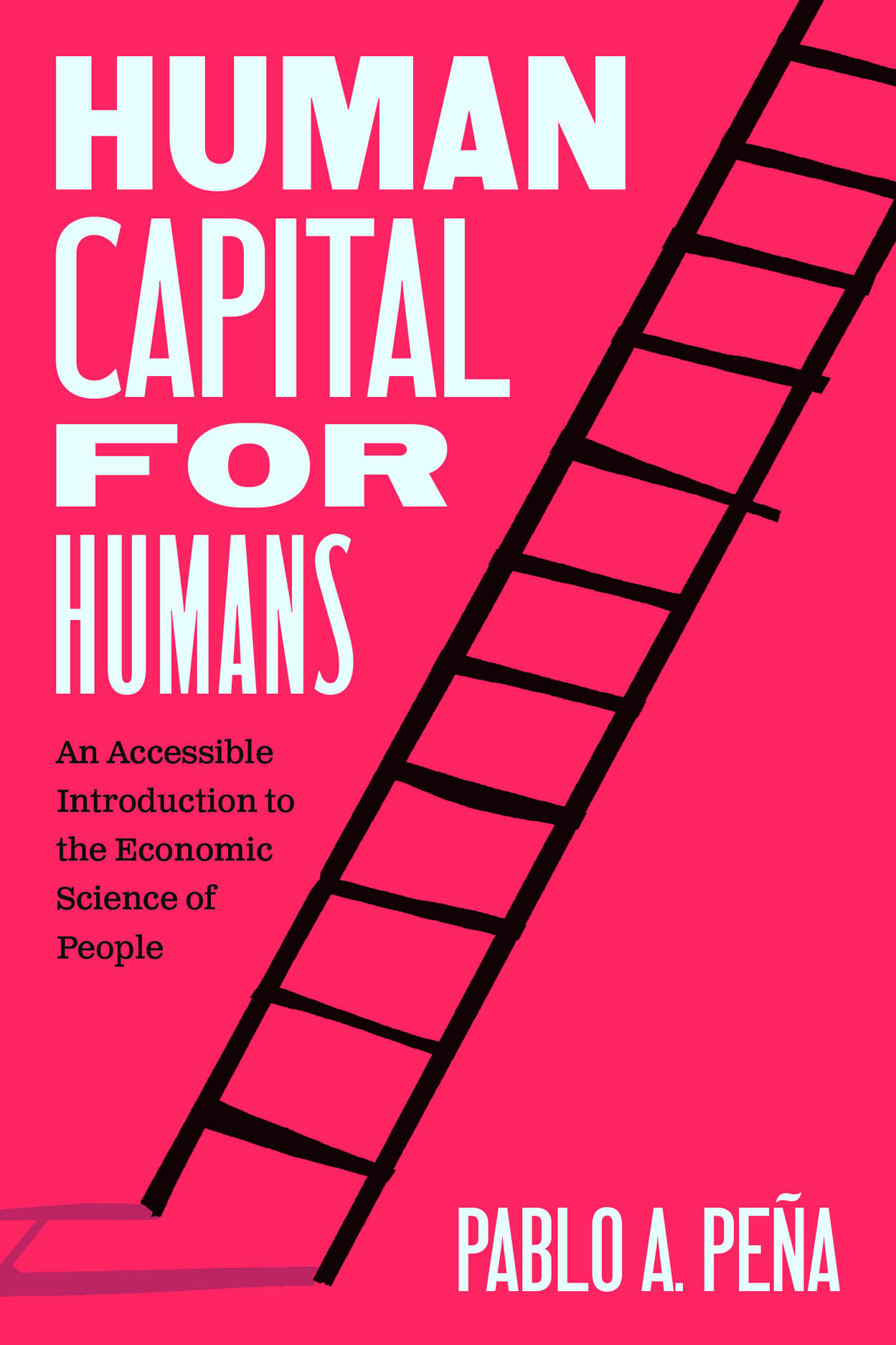
Peña first encountered human capital theory as an undergraduate in Becker’s famous University of Chicago course. He later served as a TA for the course and eventually taught it himself. His new book, Human Capital for Humans: An Accessible Introduction to the Economic Science of People (University of Chicago Press, 2025), brings that classroom tradition to a broad audience through questions about parenting, aging, marriage, health, fertility, careers, and the everyday choices that shape who we become.
This past event featured a short talk, a moderated discussion with Isaac Miller, and open Q&A.
About Professor Peña: Pablo Peña is an instructional professor in Economics and the College at the University of Chicago whose work spans applied price theory, human capital theory, empirical economics, and experimental and quasi-experimental methods. Outside academia, he co-founded Microanalitica, served as Director of Private Sector Partnerships at the Development Innovation Lab, and headed Economic Studies at Mexico’s National Banking and Securities Commission. He earned his Ph.D. in Economics from the University of Chicago.
Human Capital for Humans has been named to the Manhattan Institute’s 2026 F.A. Hayek Book Prize shortlist and has drawn praise from economists including Steven Levitt, Tyler Cowen, and Nobel laureate Michael Kremer.
Human Capital
Gary Becker
Price Theory
Family Economics
Book Talk
Open Q&A